
Our Team

Dr. Susan Leavy
Susan Leavy is an Assistant Professor in the School of Information and Communication with research interests concerning artificial intelligence, text mining, cultural analytics and AI Ethics. She is currently working on developing frameworks and techniques to mitigate bias in AI. Her postdoctoral research explored the use of artificial intelligence and text mining for cultural analytics. She earned a PhD at Trinity College Dublin detecting bias in political news with machine learning and natural language processing. She holds an MPhil in Gender and Women’s studies, an MSc in Artificial Intelligence and a BA in Philosophy and English Literature. Susan also worked internationally managing the design and development of large-scale trading platforms in the financial technology sector.

Dr. Ruihai Dong
Dr. Ruihai Dong (UCD) is an Assistant Professor with the School of Computer Science at University College Dublin. His research interests lie in Machine Learning and Deep Learning, and their applications in recommender systems and finance. Ruihai has published in top peer-reviewed journals and leading conferences such as WWW, RECSYS, IUI, ACL, IJCAI etc., and in 2018 Ruihai was awarded the Outstanding Research Award 2018, the Gerry Dunnion GEM (Going the Extra Mile) Award 2022 by the UCD School of Computer Science. Ruihai has a track record of collaboration with industry and has worked with companies including Eagle Alpha, SkillPages, and Samsung as well as winning funding from Enterprise Ireland and Science Foundation Ireland.

Dr. Jin Xu
Dr. Jin Xu is a Postdoctoral Researcher at the School of Computer Science, Insight SFI Centre for Data Analytics, University College Dublin, where he focuses on trustworthy AI and computer vision. He holds a PhD in Electronic and Electrical Engineering from Technological University Dublin. Dr. Xu’s research intersects neuroscience, AI, and human-computer interaction, aiming to enhance Brain-Computer Interface applications and data processing methodologies. His research work involves EEG spectral analysis and the development of AI-driven recommender systems. Dr. Xu collaborates extensively with industrial and academic partners globally, advancing both theoretical and practical applications of his research.
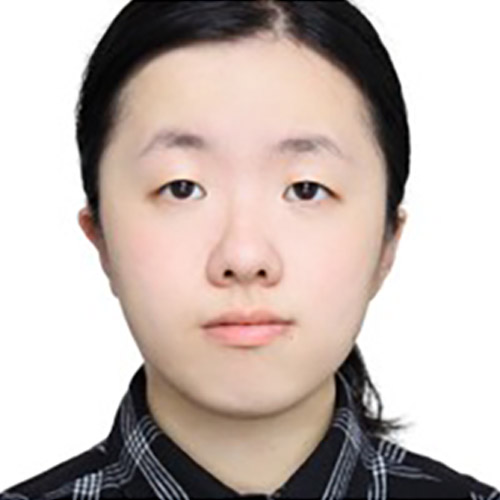
Qin Ruan
Qin Ruan is a PhD candidate at the School of Computer Science, University College Dublin, where she is conducting her research under the full funding of the SFI Centre for Research Training in Machine Learning (ML-Labs). Qin started her doctoral studies in September 2019. Her research project, titled “Exploring Media Bias in News Recommender Systems: From Detection to Mitigation”, focuses on the analysis and detection of media bias within news recommender systems. It also evaluates the potential negative impacts of media bias on recommendation interactions and explores mitigation methods to reduce the dissemination of media bias in these systems. Qin’s academic interests are natural language processing and recommender algorithms. In natural language processing, she focuses on refining models and applying them to downstream tasks such as recommendation systems. In recommender systems, her focus is on evaluating the performance of recommendation algorithms beyond accuracy and building responsible user-centric recommendation systems.

Megan Nyhan
Megan Nyhan, a PhD student since September 2023 at the School of Information and Communication Studies, University College Dublin, is under the supervision of Dr. Susan Leavy. Her research, fully funded by the SFI Centre for Research Training in Digitally-Enhanced Reality, primarily focuses on ethical and trustworthy recommendation algorithms. Megan’s diverse educational background spans Digital Media Design, Digital Film and Video, Full-Stack Development, and Human-Computer Interaction. This multidisciplinary foundation enables her to bridge the gap between social science and computer science, advocating for ethical development and evaluation of recommender systems. In addition to her academic pursuits, Megan serves as the Irish Chapter Lead for Encode Justice, a youth-led movement dedicated to ensuring young people’s voices are included in discussions about safe and equitable AI development. She strongly believes that in order to develop trustworthy AI systems a user-centric approach with meaningful involvement of many stakeholders, most importantly the end-users, must be consulted.

Kevin Doherty
Dr Kevin Doherty is AdAstra Assistant Professor of Human-Computer Interaction (HCI) at University College Dublin’s School of Information and Communication Studies. Kevin’s research focuses on advancing a human-centred approach to person-centred care for the digital age — through the design, development and evaluation of digital tools to enhance the clinical practice of healthcare, everyday mental health, and digital wellbeing. Current research projects span the development of digital and AI tools to support the online and face-to-face practice of therapy, self-report technologies to inform and facilitate access to mental healthcare, and decision-support systems to augment care for chronic, co-morbid conditions. Kevin is Director of UCD’s MSc in Human-Computer Interaction Programme, a leading member of the cross-disciplinary HCI@UCD research group, and a member of the AI Healthcare Hub at the UCD Institute for Discovery, the ADAPT Centre’s Health Working Group, UCD’s Community of Practice for Public Engagement, the Irish Chapter of ACM SIGCHI, and the Copenhagen Center for Health Technology.
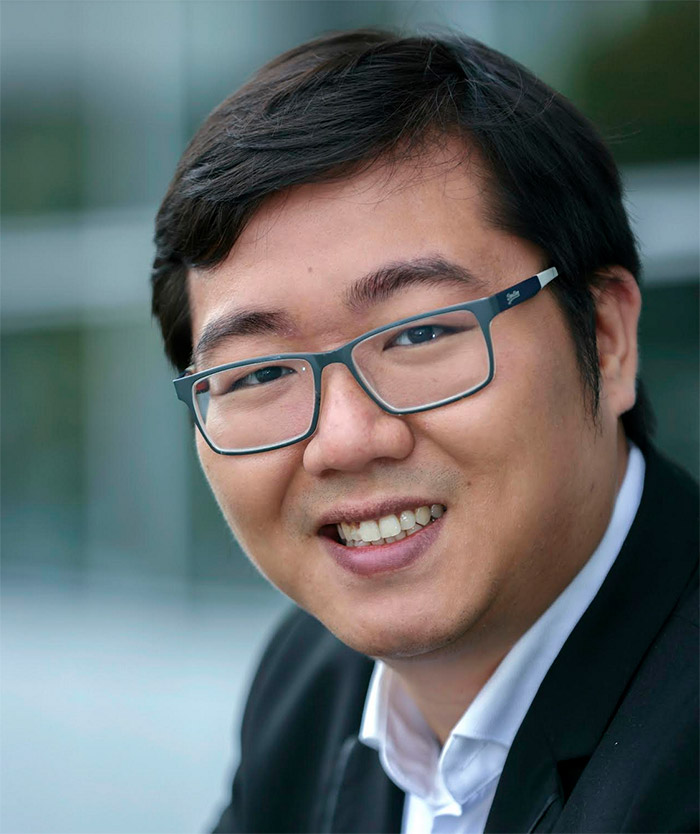
Dr. Tai Tan Mai
Dr. Tai Tan Mai is an Assistant Professor in the School of Computing, at Dublin City University and an Academic Collaborator of the ADAPT centre. Tai obtained his PhD in Computer Science at Dublin City University where his research project was funded by the Irish Research Council. His current research interests include Learning Analytics, Process Mining and Complex Systems in Behavioural Analytics. Before his time in Ireland, Tai was a university lecturer as well as an experienced Software Developer & IT Consultant with years of working in the IT and Finance industry in Vietnam.

Dr Josephine Griffith
Dr Josephine Griffith is currently a Lecturer and researcher in the School of Computer Science in the College of Science and Engineering at University of Galway. Josephine’s current research is in the areas of Recommender Systems (with projects on the topics of “Emotion Detection for Recommender Systems” and “Ethical Recommender Systems”) and Multimodal Sentiment Analysis in the domain of Natural Language Processing. Josephine supervises a number of MSc students in the areas of Artificial Intelligence and Data Analytics each year. Josephine currently supervises four PhD students with co-supervisors in the University of Galway, University College Dublin and TU Dublin.

Kayley Moylan
Kayley Moylan is a PhD Student Researcher at University College Dublin. Drawing on a background spanning Human-Computer Interaction, Psychology, and experience working in the domain of Mental Health support, Kayley’s current research focuses on the design and critical evaluation of digital – including AI – tools to enhance creative emotional expression in psychotherapeutic practice to alleviate mental illnesses.

Barry O'Sullivan
Professor O’Sullivan is a full professor at the School of Computer Science & IT at University College Cork (Ireland) and a visiting professor at Northwestern (Illinois, USA). He works on artificial intelligence, constraint programming, operations research, AI/data ethics, and public policy. He contributes to several global Track II diplomacy efforts related to geopolitical aspects of AI. He is founding director of the Insight SFI Research Centre for Data Analytics at UCC and the SFI Centre for Research Training in AI. He served as Vice Chair of the European Commission’s High-Level Expert Group on Artificial Intelligence which formulated the EU’s ethical approach to AI. He currently represents the European Union at the Global Partnership on Artificial Intelligence. Professor O’Sullivan is a Fellow and a past President of the European Artificial Intelligence Association. He is also a Fellow of the Association for the Advancement of Artificial Intelligence. He is a member of the Royal Irish Academy and holds a number of ministerial appointments, such as Chair of the National Research Ethics Committee for Medical Devices and member of Ireland’s AI Advisory Council. He conducts his diplomacy work in collaboration with INHR (Geneva, Brussels, Washington DC), the Center for New American Security (Washington DC), and the Geneva Centre for Security Policy. His awards include Science Foundation Ireland Researcher of the Year (2016), Member of the Royal Irish Academy (2017), IPEC-EATCS Nerode Prize (2020), Science Foundation Ireland Best International Engagement Award (2021), and the European AI Association’s Distinguished Service Award (2023).